
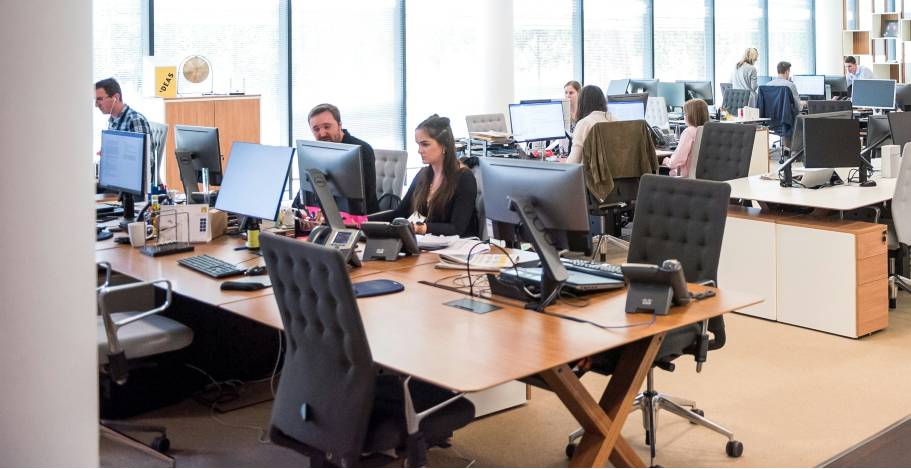
Hybrid working hasn’t simply changed where people work. It’s changed what businesses need to protect. When most employees accessed company systems from the same office, security could be built largely around that location. Today, staff might connect from home, a client site, a hotel or another office, often using cloud applications across several devices.
For businesses, that doesn’t necessarily mean security has simply become more expensive. Instead, the costs have shifted towards protecting a much more distributed working environment.
Traditional approaches were designed around a relatively clear boundary. Employees came into the office, connected to the corporate network and accessed systems from managed devices.
That boundary is now much harder to define. More than a quarter of working adults in Great Britain, 28%, were hybrid working between January and March 2025, according to the Office for National Statistics. Employees therefore need secure access to business systems wherever they happen to be. Security now has to follow the user rather than simply surrounding the office.
That shift creates costs that aren’t always obvious when a hybrid policy is introduced. Businesses may need additional remote-access capacity, device management software, endpoint protection, multi-factor authentication and greater IT support. Then there’s the human element. More locations and devices mean employees need clear guidance on phishing, lost equipment, passwords and reporting suspicious activity.
Yet the government’s latest Cyber Security Breaches Survey found that only 19% of UK businesses had provided cyber security training or awareness activities during the previous year. The cost of hybrid security, therefore, isn’t just software. It includes people, support, monitoring and ongoing management.
One problem with responding to every new risk individually is that organisations can quickly accumulate a collection of separate security and networking tools. That creates its own expense. More platforms mean more licences, administration, monitoring and specialist knowledge.
Integrated approaches can help reduce that complexity. For example, SASE security solutions that bring networking and security together can provide organisations with a more unified way to secure access across offices, remote users, devices and cloud applications.
Throwing more money at cybersecurity isn’t automatically the smartest approach. Businesses need to understand where their genuine risks sit. Which systems contain sensitive information? Which employees work remotely? What devices do they use? Where would an interruption cause the most damage?
A risk-based approach can help businesses concentrate spending where it matters most. That might involve stronger authentication, employee training, device controls and better network visibility rather than simply buying another security product.
Hybrid working hasn’t removed the need for security investment. It has changed where that investment needs to go. Businesses are now protecting people and data across a much wider digital environment, making scalability and simplicity increasingly valuable.
The organisations that manage those costs most effectively will be those that understand how their people actually work, consolidate unnecessary complexity and invest in protection that can adapt alongside the business. Because in a hybrid world, good security isn’t about defending one location. It’s about maintaining secure access wherever work happens.
Helpful Resource Depending On Your Requirements